

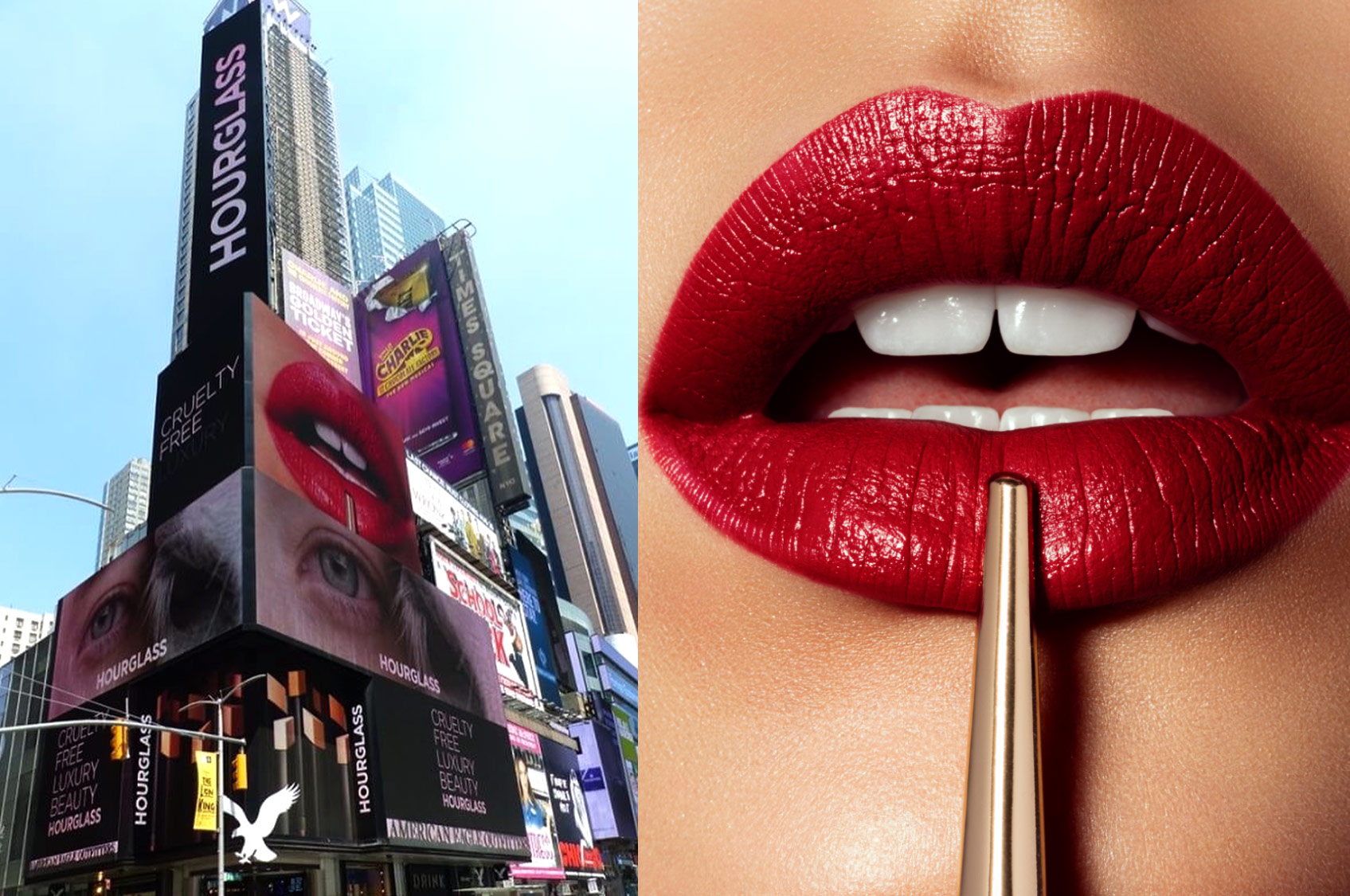
Featured image: Times Square ad for Hourglass Cosmetics (owned by Unilever),
Photography & retouching: Julia Kuzmenko McKim
The world of professional beauty photography and retouching is very exciting, collaborative, and diverse. You never stop learning and growing as a creative professional because every job is a set of new challenges that keep your problem-solving and retouching skills sharp and ever-evolving.
In retouching, as in any freelance career, virtually everyone begins with the simplest form of doing business – offering free or low-cost services to develop their skills and build their portfolios.
Initially, this often involves collaborating with photographers, models, and makeup artists, working on small-scale projects to gain experience.
For many, this is where their freelance journey stalls—staying within the circle of individual clients and small creative teams.
This can be a comfortable niche they select to linger in, but it may also be due to a lack of awareness about the broader opportunities available to professional retouching artists.
If you’re interested in taking your retouching career further, the good news is that there is significant room for both professional and financial growth in retouching.
Types of Clients in Retouching
As a freelance retoucher, your clients will generally fall into two main categories:
♦️ Individual clients: Regular people or photographers who primarily work with individual clients.
♦️ Commercial clients: Businesses of all sizes and industries that need high-quality visual content to promote their products or services.
When you work with individual clients, the images you are hired to retouch will be used for their personal enjoyment, to add to their work portfolios, or to grow their personal or business social media following.
Naturally, commercial clients have larger budgets to invest in high-quality visuals that drive their business forward. As a result, a skilled retoucher who works directly or indirectly (through a creative agency, retouching house, or commercial photographer) with commercial clients has a better opportunity not only to sustain their business but also to achieve a quite comfortable income level much quicker.
Commercial clients, particularly in the beauty and lifestyle industries, often have large budgets for visual content to support campaigns aimed at generating substantial profits—sometimes in the multi-million dollar range.
Unlike individual clients’ projects, commercial work can provide consistent, high-paying opportunities to freelancers.
Additionally, one of the greatest advantages of being a freelance retoucher is the freedom to work remotely. So, your career potential isn’t tied to your geographic location, allowing you to collaborate with clients and brands from all over the world.
If you aim higher and expand your horizons, the possibilities for growth and success in retouching are virtually limitless.
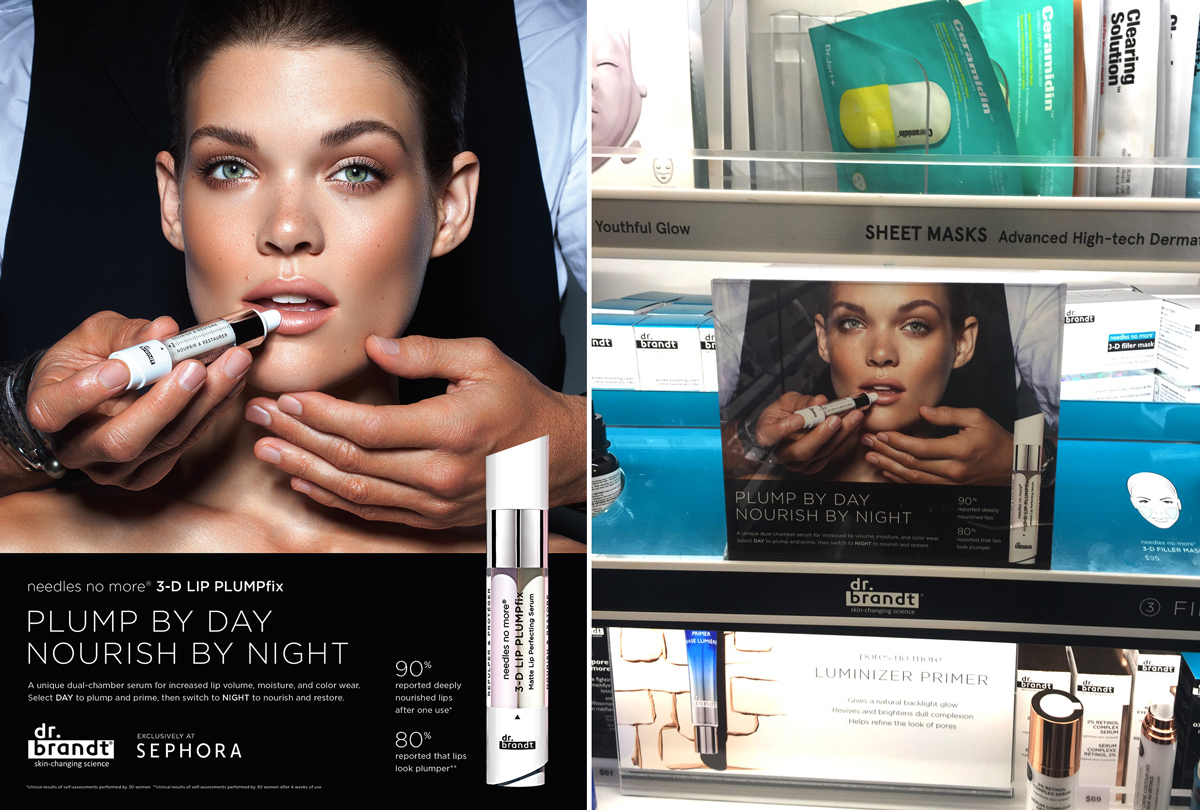
Client: Dr Brandt Skincare, Photography & Retouching by Julia Kuzmenko McKim; Usage License: Web & Print for Point-of-sale (Sephora), advertising in major fashion magazines (Elle, Harpers Bazaar, Marie Claire, etc.);
Do You Really Need Low-Profit Clients?
The Customer Classification Matrix, a widely used model in business strategy, emphasizes the importance of focusing on high-profit, low-maintenance clients. These clients provide the best return on your time and effort, contributing to long-term business success.
Conversely, it is advisable to minimize or eliminate low-profit, high-maintenance clients, as they can drain your resources and limit your growth potential.
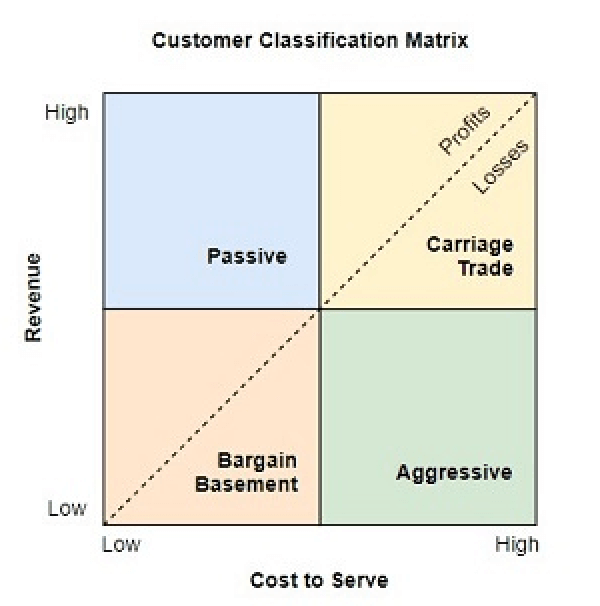
For retouchers, this means prioritizing commercial clients or well-established creative professionals over individual, low-budget projects.
In the retouching business, individual clients often fall into the low-profit, high-maintenance category. They may present long lists of retouching requests (sometimes unreasonable) per image and expect multiple rounds of revisions, stretching your time and patience without proportionate financial reward.
By aligning your services with clients who value your expertise and offer profitable opportunities, you can build a thriving freelance career with greater stability and financial rewards.
Why Commercial Clients Are a Better Bet
While some commercial clients can also be high-maintenance, they typically offer several advantages:
✅ Clear Goals and Professionalism: Commercial clients are usually more experienced and organized. They typically have a specific timeline and a goal in mind and are less likely to change directions repeatedly throughout a project (though it can still happen).
✅ Effective Communication: As a service vendor, you typically interact with client representatives (your contact person, or “handler”). Those are usually professionals who understand the industry and speak the same language as photographers and retouchers.
This can help streamline communication, reduce misunderstandings, guard off some unreasonable requests on the client’s side, so they don’t even reach you, and provide valuable learning experiences that enhance your expertise.
✅ Higher Pay for Your Time: Commercial work generally offers better compensation for your time, skills, and effort, making it easier to earn a comfortable living while doing what you love.
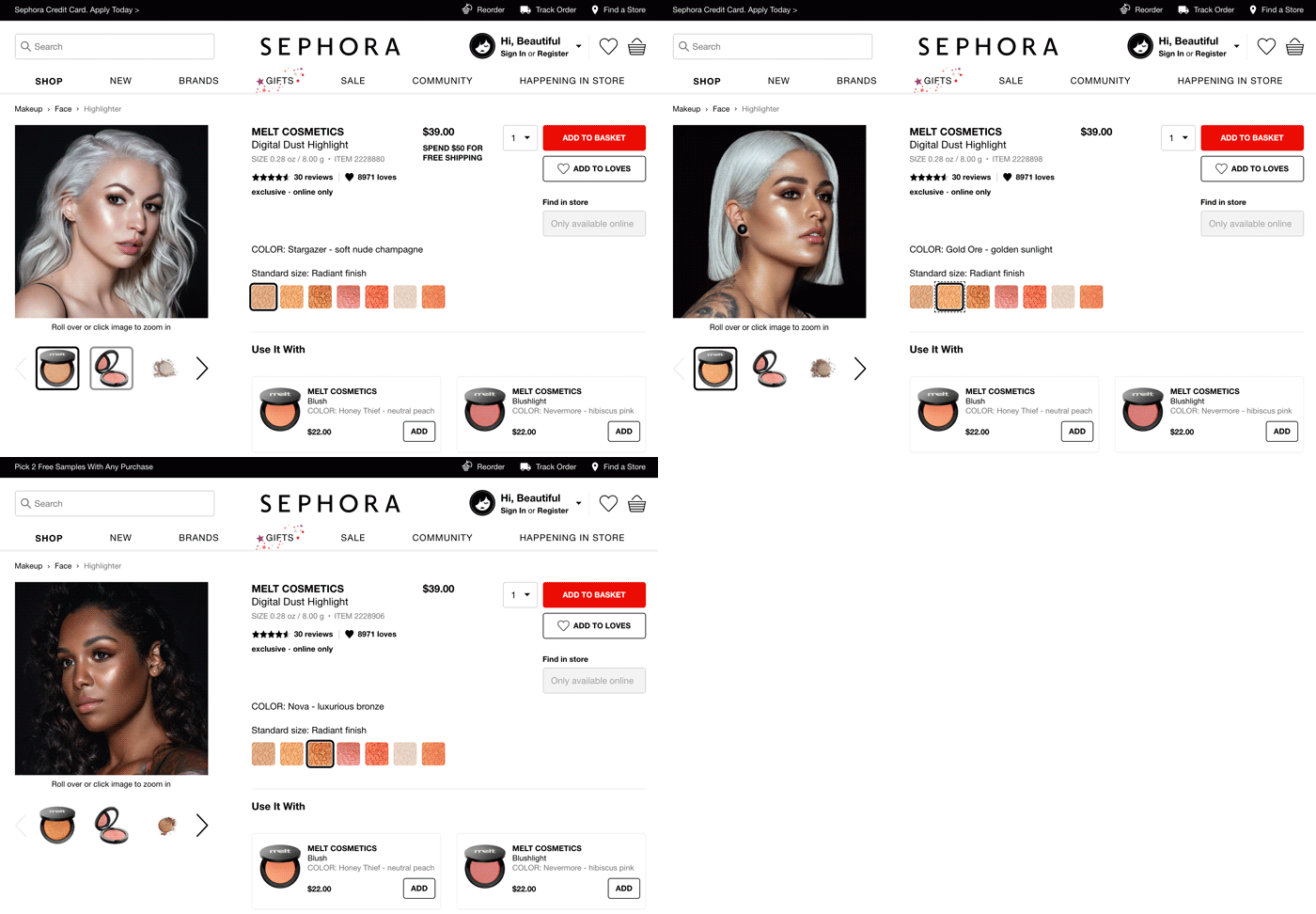
Client: Melt Cosmetics, Photography & Retouching by Julia Kuzmenko McKim
To match the income potential of working with commercial clients, you would need to take on a larger volume of individual clients, each with unique needs and requirements. This constant adaptation can become exhausting and may lead to burnout and resentment over time.
Moreover, working with individual clients often involves greater financial risk. Unlike established businesses, individual clients may delay payment or, worse, disappear after receiving the retouched images.
Enforcing payment for services rendered can be nearly impossible without formal contracts or legal recourse, which is rarely worth pursuing for smaller invoices.
In contrast, established businesses have more at stake and are less likely to jeopardize their reputation by avoiding vendor payments.
This reliability, combined with the higher earning potential, makes commercial clients a smarter and more sustainable choice for creative professionals.
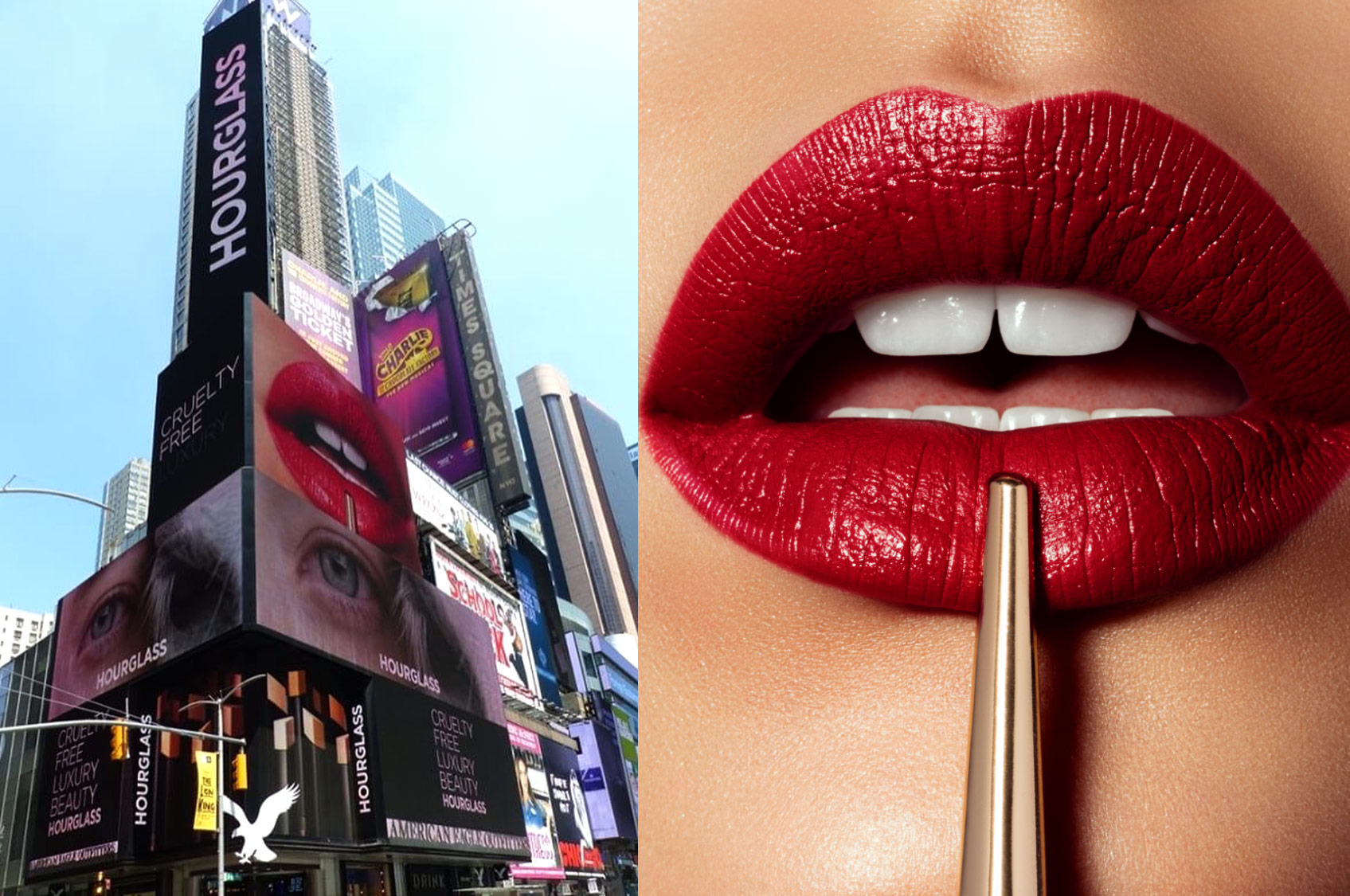
Advertising on Times Square, NYC; Client: Hourglass Cosmetics (owned by Unilever), Photography & Retouching by Julia Kuzmenko McKim
Clearly, there is immense social, financial, and creative satisfaction for freelancers who work with commercial clients.
Despite this, however, few retouchers strive to elevate their craft and pursue these lucrative opportunities.
Over the years, through Retouching Academy contests and recruitment for my Avenue Retouching agency, I’ve observed that probably under 5% of freelance retouchers meet the required standards for commercial work.
These top-tier professionals not only possess advanced retouching skills but also demonstrate a professional approach to communication, file organization, and workflow management.
Scaling Up Without Compromising Quality
In the past decade, I’ve focused on serving established brands as a commercial beauty photographer and retoucher.
My client roster gradually grew to include national and global brands like Urban Decay Cosmetics (L’Oreal), Pat McGrath Labs, Melt Cosmetics, Hourglass Cosmetics (Unilever), TATCHA, Sunday Riley, NEUTROGENA, and GlamGlow (Estée Lauder) among others.
Some of these brands became regular clients, with project sizes expanding significantly with each completed project.
Initially, client requests were for smaller campaigns with up to 10 images, and quickly evolved into large-scale projects shooting and retouching 60-120 photos.
The scope of these commissions often included full-face beauty and macro beauty shots, demanding both precision and efficiency.
As the projects grew, so did the need for skilled retouching help. To maintain quality and meet tight deadlines, my team and I often work insane extra hours, ensuring every deliverable meets the high standards expected by our clients.
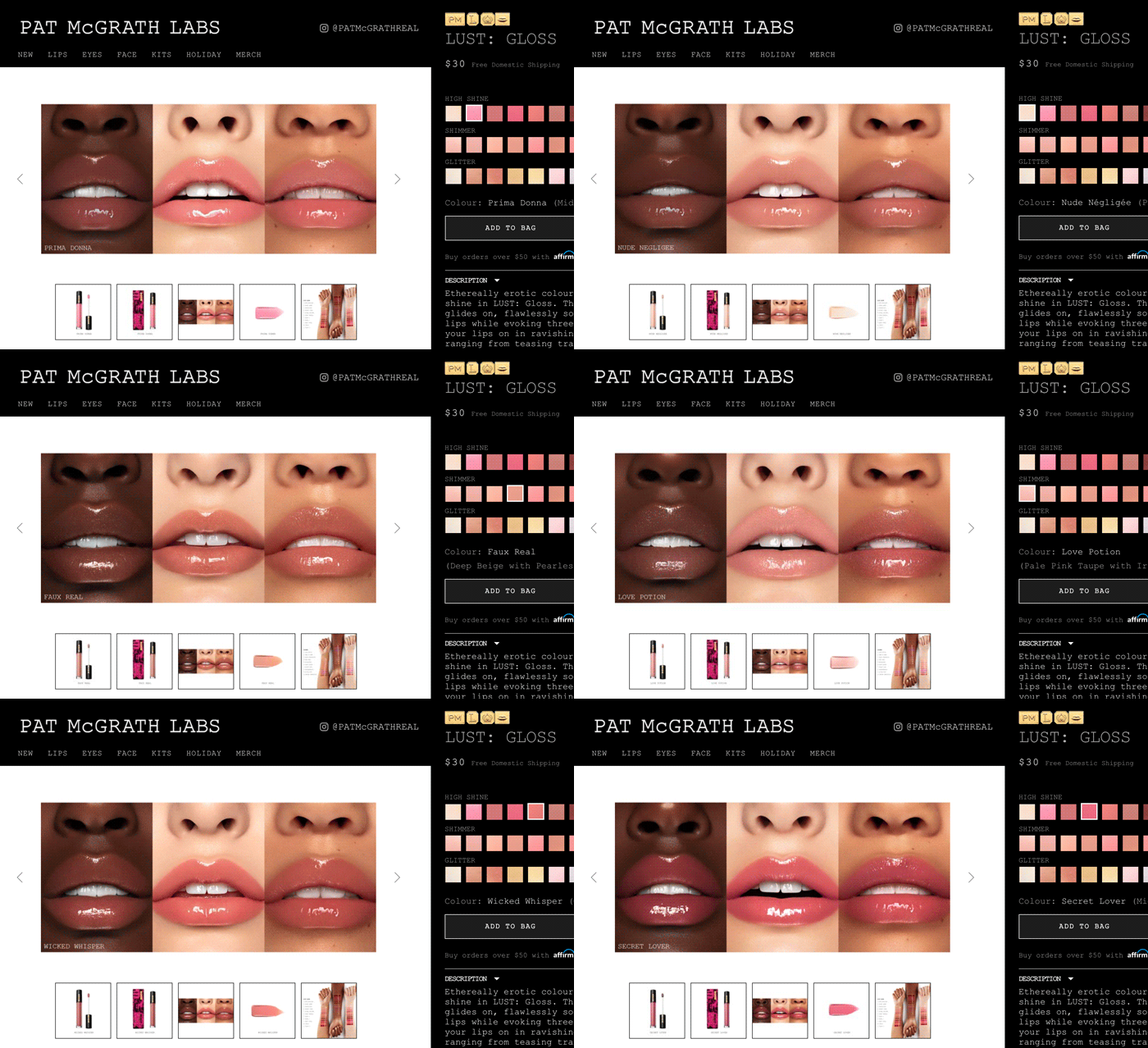
Client: Pat McGrath Labs, Photo & Post-Production by Julia Kuzmenko McKim and Avenue Retouching Agency
The images we produce are used in product launches, advertising campaigns, and brand promotions, each involving multiple stakeholders and strict internal deadlines.
Missing a deadline is simply not an option.
Shooting with a large-sensor camera, each retouched image file can range from 1-2 GB. This scale of work taught me the importance of efficient retouching methods to avoid unnecessarily large PSD file sizes. The same discipline applies to my team, ensuring smooth file transfers and collaboration within our workflow.
As you can see, success for freelancers in the commercial world is not just about their technical retouching skills but also about being fast, efficient, and consistently reliable.
All this means that when I am looking for new team members, I am looking for retouching professionals who:
✅ Already understand the unspoken rules of the fast-paced commercial world.
✅ Prioritize clear and direct communication.
✅ Understand the importance of the non-destructive and lean-PSD approach for quick file turnaround when dealing with large projects.
✅ Know how to properly structure their PSD files, so it is easy for me to quickly and seamlessly finalize each file before submitting them to the client.
✅ Well-organized files also make it easy to make quick adjustments without unnecessarily re-doing any work.
By mastering these aspects, you have everything you need to elevate your career, secure high-paying clients, and enjoy the many rewards of working with established brands.
Time is money for your clients and your own freelance business.
In commercial photography and retouching, time is always limited. Everything needs to be done fast, often at the last minute, making it essential to get everything retouched correctly and non-destructively right from the start.
An efficient retoucher not only delivers quality work but also contributes to a smooth workflow, which is invaluable in high-stakes projects, especially when revisions are needed and multiple retouchers handle the same files.
Why Professionalism Matters So Much
Over the years, I’ve tested countless retouchers for my post-production team, and, unfortunately, I discovered that only a small percentage delivered images with high-quality skin retouching and accurate colors.
Many retouchers submitted poorly structured, messy, and bloated PSD files, which makes further file handling slow and often frustrating.
While it may not seem like such a big problem if the retouch itself is not bad, the truth is that in the professional world, no one has the time to waste on working with disorganized or unprofessional freelancers.
When budgets are in multiple tens of thousands of dollars, clients expect competence, speed, and reliability. They are more likely to pay a premium for a retoucher who consistently proves to be a valuable and dependable part of their team.
Many retouchers compete in the overcrowded bottom of the market, where rates remain low, especially with the rise of generative AI tools.
However, highly skilled professionals who can handle commercial post-production as freelancers or internally, managing outsourced creatives, will remain in high demand.
Tools and turnaround times may change drastically, but businesses will continue to require quality post-production for promo materials of their products and services (check out the beauty market forecast), visuals for their social media content, websites, point-of-sale materials, and other marketing assets.
Because the pool of highly skilled professionals is relatively small, clients recognize their value.
These post-production professionals don’t need to fight for jobs—they build lasting relationships with clients, leading to repeat business and financial stability.
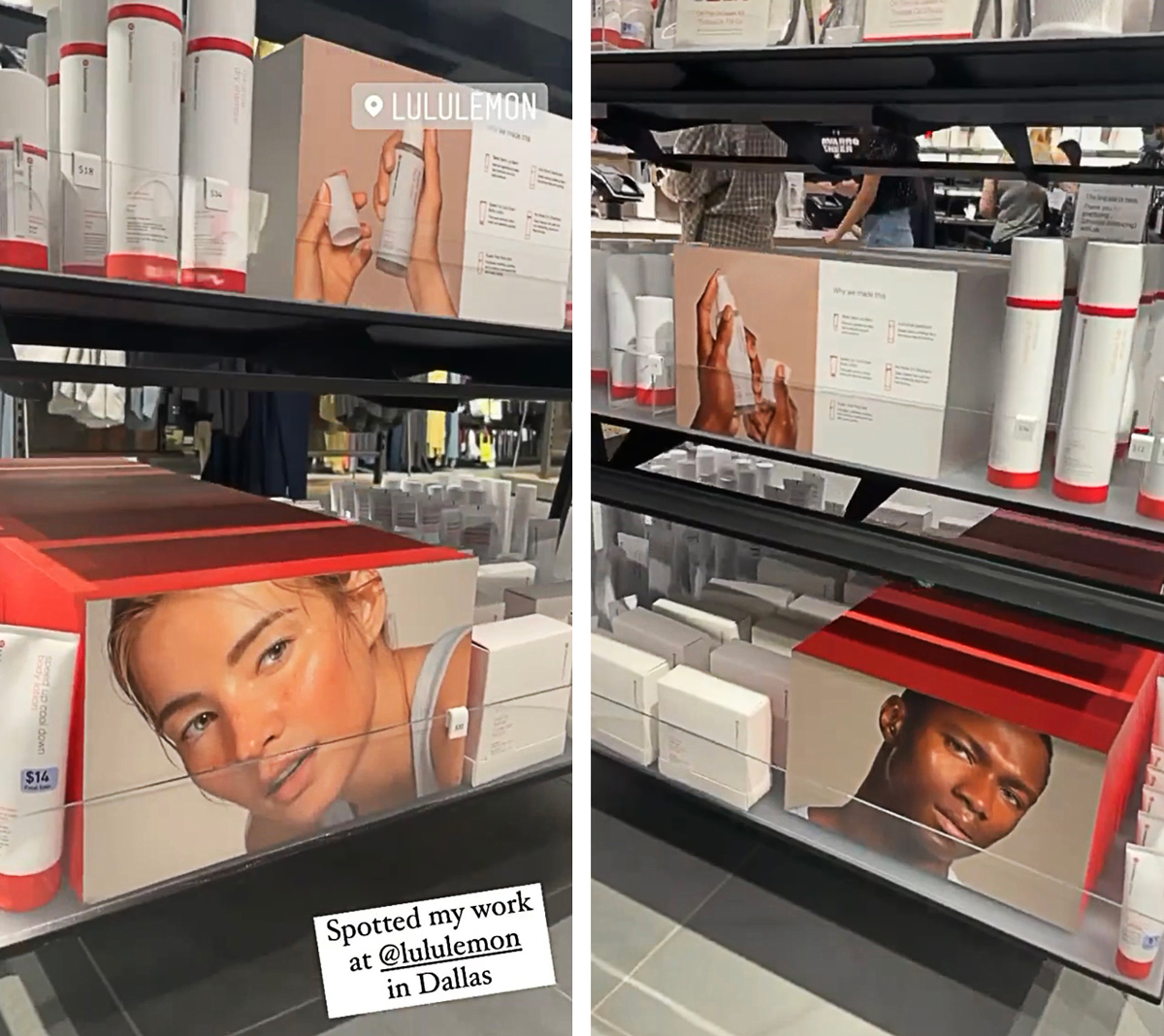
Client: Lululemon, Photography & Retouching by Julia Kuzmenko McKim and Avenue Retouching Agency
In the world of professional photography and retouching for commercial clients, there is no room for excuses. Reliability and skill level are the two most critical qualities that set professionals apart.
You might get lucky and land a great commercial gig, but if you don’t understand what makes your client’s life easier, chances are you won’t be hired again.
A freelancer’s goal should always be to secure repeat business, allowing you to spend more time working on paid projects and less on chasing new clients.
While commercial retouching offers higher rates and salaries, it also comes with higher expectations and larger workloads.
It demands serious skills, a strong work ethic, and the determination to stay in demand. Success in this field is not just about raw talent—it’s about mastering the habits and practices that make you a valuable and dependable professional.
We can’t teach reliability or resilience, but we can help you develop the technical skills and professional habits needed to thrive in commercial post-production.
By building a solid foundation, you will be ready to deliver exceptional results when great opportunities present themselves.
Standardized Pro Retouching Approach
In early 2019, after many trials and testing, I finally assembled a strong retouching team. Since then, these talented retouchers have consistently proven their reliability and skill, delivering high-quality results even under tight deadlines and heavy workloads.
Professional retoucher and educator Sarah Tucker joined us as a Post Production Director to handle the Avenue agency workload. Sarah’s impressive background as a commercial retoucher spanned over a decade, including in-house and freelance work with top-tier clients like Conde Nast (the publisher of Vogue magazine and many others).
Combining my experience as a commercial beauty photographer and retoucher with Sarah’s expertise as a Senior Retouching Artist in London’s top retouching houses, we quickly optimized our internal processes. Our goal was to streamline workflows and ensure consistent, high-quality results in large commercial projects.
To establish a standardized retouching approach, we created internal video training for our Avenue team, and over time, these resources evolved into the Professional Beauty Retouching video course, which we are now sharing with the broader retouching community.
Our goal is not only to help retouchers refine their technical skills but also to elevate their professional approach and take their freelance business to the next level.
It will also make it easier for us to find talented professionals as our team grows 😊
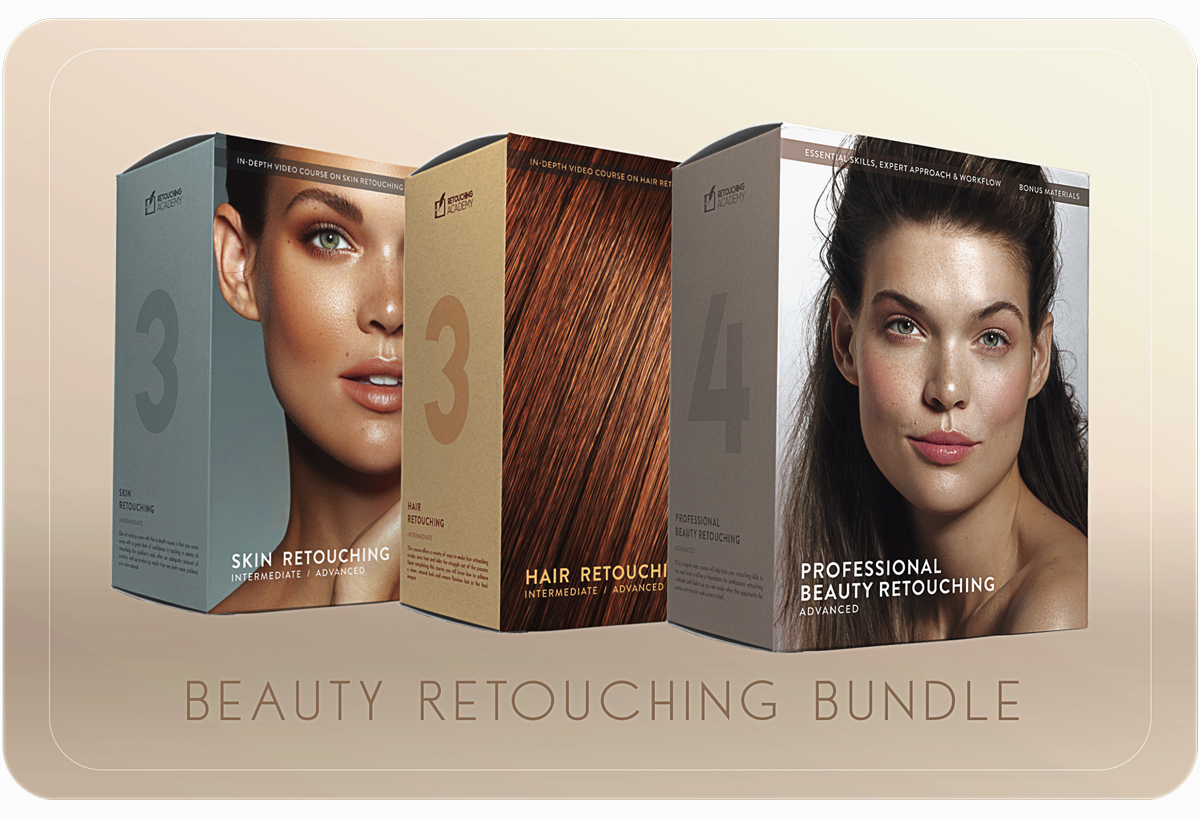
Our new Professional Beauty Retouching video course is now available as a stand-alone course, as well as a part of these bundles:


Thank you very much Julia for taking the time to do all this. How can we get these customers, really how we look for them? And on the other hand, when does the course come out? will be free ? I can not wait!
Hello Daniel, it’s my pleasure!
Finding your clients is a topic for a different conversation as the goal of this course is to help freelancers to get their retouching skills ready before they begin looking for those clients. But you can check out our Retouching Business educational module right here, we have a few articles that give you many options on where to look for retouching clients: https://retouchingacademy.com/retouching-business/
The new video course will be coming out this week, and it is not free. Stay tuned, we will be announcing everything on our social media as well as our blog 🙂
Dear Julia,
thank you for your constant update about retouching career.
I’m really interested about how to produce a lean-PSD and how to properly structure the PSD files. Especially intervention’s sequence. There are too much non-definitive theories on the web.
Thank you!
It’s really great to hear that you are interested in the right things! These points are so very important for professionals!
And yes, we cover this in-depth in our new course and there are also 2 full retouches from start to finish where you can see the theory applied 🙂
Hi Julia – I look forward to learning more about your new video course. I welcome new learning opportunities to increase my skills.
Thanks,
John
That’s wonderful to hear, John!
Thank you! We will be announcing everything shortly!
Hello Julia!
Thank you so much for such useful information. I am wondering when will I be able I purchase this course and when does it start?
Thank you!
Thank you Elina!
Sure, we will be announcing everything this week 🙂
Hi Julia!
Enjoyed and learned a lot from this course. Only wish that a full commercial retouch was also done . There were parts were I feel Sarah spoke too quickly but I guess can always rewatch the parts I didn’t get the first time. 🙂 Thank you for the course!
Hi Janina,
Thank you so much! On behalf of our team, I want to say that we are so happy to hear all of the wonderful comments and feedback on this course – if all our future candidates for the Avenue agency will use the methods and PSD organization and labeling habits that we’re teaching in it, we will have so many more strong retouchers to choose the best of the best from 🙂
And yes, the reason why we always choose to not drag out our video lessons and keep a good pace is because we know firsthand how little time busy freelancers have for anything, and any and all videos in this and any course for that matter should be watched more than once to really grasp what is being taught.
With that in mind, this pace might be too slow for some people, and a little too fast for others, but you can always stop, rewind and re-watch any part that you want to really understand. Hope this helps! And again thank you so much for your trust and sharing your feedback with us! Wishing you the best of luck in your journey ❤️
PS. Also please keep an eye out for the follow-up email sequence that we will be sending out to everyone who purchased this course in a few of weeks (after everyone finishes watching the course). That sequence will be focused on helping you to actually get and keep the clients that you want!
Hi again Julia,
Wish that the course included the photo with the girl with a top so we could follow the lessons using that example.
Hi Janina,
Which image do you mean? I will look into that and maybe we can add it as a bonus in the email sequence, which I just mentioned in my previous comment.
In the meantime, please check out the Raw practice files that we have on our RA Lab website, there are very many images that you can use for practicing the same approach and techniques: https://retouchingacademylab.com/free-raw-practice-files/
We also have some more new Raw files that we will be adding to that page soon.
Hi Julia & Sarah,
Great course! I was skeptical at first. Would i learn new things
But i learned a lot. I can finally make my masks properly. 😉
I would love to see a sort of check-list of the whole structuring workflow to put on a print-out.
Best Ivo.
Thank you! Yes, precise and efficient masking is such a crucial skill for professionals! It cannot be underestimated for sure.
In our Avenue retouching agency, we mainly work on commercial beauty work, and yet we receive a lot of client requests that involve precision masking – it’s often for color-matching and Sarah, the instructor who recorded this course, always the one we send all such tasks to because she is a masking ninja!
Thank you so much!!
I want to learn retouching.